
Last Updated: May 2026
Medical device labeling includes all labels, instructions for use (IFU), and any written, printed, graphical, or electronic information provided by the manufacturer that accompanies a device.
Manufacturers worldwide must comply with both international standards and local regulatory requirements when marketing medical devices. In Mexico, labeling requirements are governed by NOM‑137‑SSA1‑2025, which introduces a modern, risk-based approach aligned with global regulatory frameworks.
This article summarizes the current requirements for medical device labeling in Mexico and provides practical guidance to ensure compliance with COFEPRIS regulations.
NOM‑137‑SSA1‑2008 vs NOM‑137‑SSA1‑2025: What Has Changed?
The Mexican regulatory framework for medical device labeling has evolved significantly with the publication of NOM-137-SSA1-2025, which replaces the former NOM-137-SSA1-2008.
The 2025 updated standard moves beyond basic compliance and introduces a more sophisticated, risk-oriented, and digitally enabled approach aligned with international standards such as ISO and IMDRF principles.
Key Changes in NOM-137-SSA1-2025
-
Risk-Based, Safety-Oriented Labeling
Labeling must now be developed under a risk management approach, integrating intended use, residual risks, contraindications, and key safety and performance information to ensure safe and effective use across the device lifecycle.
-
Integration of Tecnovigilance Requirements
Labeling must include clear instructions on reporting incidents or adverse events, specifying the appropriate responsible party and competent authority, thereby strengthening post-market surveillance.
-
Joint Responsibility of Manufacturer and Registration Holder
The standard recognizes that the manufacturer and the registration holder might be different entities and confirms that both are responsible for the sanitary information included in labeling.
In practice, original labeling is rarely sufficient to meet Mexican requirements. This makes close coordination essential, particularly when compliance requires supplementary back or counter-labeling.
-
Expanded Scope and Electronic Labeling (Label and IFU)
“Labeling” now explicitly includes the label, IFU, manuals, and other manufacturer-provided information. The 2025 version establishes clearer and more precise requirements for both the label and IFU.
In addition, the new standard formally recognizes electronic formats (such as QR codes, RFID, websites, and eIFU) as valid means of delivering labeling information.
-
New categories covered
- Software as a Medical Device (SaMD): must include version, revision level, or release/edit date
- In vitro diagnostics (IVD): subject to more detailed requirements
- Kits, biological materials, and combination devices
-
Harmonization with International Standards
The standard incorporates concepts from ISO 15223 (symbols), ISO 20417 (labeling), and IMDRF guidelines, and aligns symbol usage with systems such as the EU MDR. This reflects a move toward international harmonization, particularly through standardized symbols to ease transitions across markets. While not fully harmonized, several key elements are now aligned with widely recognized frameworks.
Flexibility of Counter-labels (Important Update)
The use of a Counter-label, over-label, back-label or secondary label (contraetiqueta) remains permitted under NOM‑137‑SSA1‑2025. However, its role is more strictly defined.
Foreign manufacturers may still retain their original labeling, provided that any missing regulatory information is added through a compliant secondary label. This label must:
- Be consistent with the approved Sanitary Registration
- Not obscure critical information
- Reflect updated requirements including risk information, intended use, and traceability data.
This means that, compared to NOM‑137‑SSA1‑2008, simple supplementation may no longer be sufficient, a more comprehensive regulatory review is required.
Key Definitions Under Mexican Medical Device Labeling Regulations
There are four main definitions that will help us to understand the Mexican regulation related to medical device labeling:
- Labeling: includes all elements such as the label, counter-label, manuals, Instructions for Use (IFU), and any other information provided by the manufacturer or the registration holder that relates to the identification, technical description, intended use, and proper use of the medical device, excluding shipping documents.
- Label: tag, label, inscription, graphic image that has been written, printed, stenciled, marked, embossed, drawn, adhered, or sealed on any material capable of containing the medical device including the container itself.
- Counter-label, over-label, secondary label or back-label: label containing the full or complementary information (to that included in the original label) when the original label of the device does not meet fully or partly the requirements of the NOM-137-SSA1.
* For purposes of this article, the term “counter-label” will be used to refer to all such labels. - Symbol: design or graphic to complement or substitute information required to be included in the medical device label (NOM-137-SSA1 appendixes A and B). Now must be understandable or described if not standardized.
An interesting concept is the so-called counter-label (over-label), this is an especially useful alternative to be compliant with the Mexican regulation.
Specifically, foreign medical devices companies are allowed to import and distribute their products in Mexico with their original labels without the need of making an especial label for the Mexican market. This reduces operative and logistic costs for the manufacturers. However, original labels must be carefully reviewed, and in most cases a counter label needs to be created to complement the information not originally included.
Counter-Label (Over-Label): How Foreign Manufacturers Can Comply
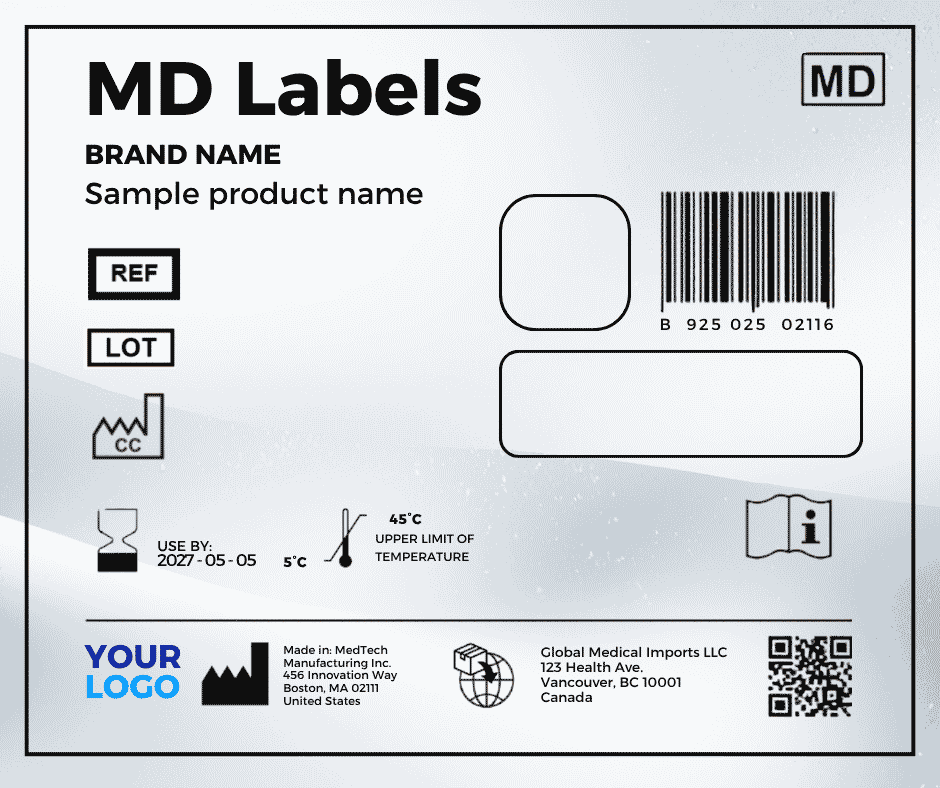
As mentioned, the counter-label (over-label) consists of a written document that is printed in adhesive paper with the purpose of being attached to the medical device packaging.
The following points must be included in the counter-label when not included in the original label:
- Product trade name (registered trademark)
- Generic name of the product (common name)
- Model(s) and catalog number(s) or part number or reference number
- Sanitary registration number (local approval code)
- Made in (country of origin) by
- Manufactured for (third party manufactured products), when applicable
- Imported (foreign manufactured products) and distributed by
- Batch /lot or serial number
- Expiration date, when applicable
- Storage and handling conditions
- Product sterilized with (sterilization method), when applicable
- Single-use product (not reusable), when applicable
- Description of non-standardized or special symbols on the label
- Manufacturing date
- Intended use
- Warnings, precautions, and contraindications
- Contact information for incident reporting
- Reference to instructions for use (IFU)
It is important to mention that the counter-label must match the original label, instructions for use or user manual, technical file and sanitary registration issued by COFEPRIS. The distributors and sanitary registration holder are responsible for attaching the counter-label after the importation process, but most importantly, before the commercialization.
Transitional Provisions for NOM‑137‑SSA1‑2025
The updated Mexican labeling standard NOM‑137‑SSA1‑2025, published on May 19, 2026, establishes transitional provisions that are particularly relevant for foreign manufacturers intending to continue or initiate commercialization of medical devices in Mexico. The standard will enter into force 360 calendar days (May 14, 2027) after its publication, providing companies with approximately one year to assess, update, and align their labeling compliance strategies with the new regulatory requirements.
Once the new standard becomes effective, manufacturers and distributors will have an additional 180 calendar days (November 10, 2027) following the entry into force to exhaust existing inventories of finished products and packaging materials that do not yet comply with NOM‑137‑SSA1‑2025.
Frequently Asked Questions (FAQ): Medical Device Labeling in Mexico
- What regulation governs medical device labeling in Mexico?
Medical device labeling in Mexico is regulated by NOM‑137‑SSA1‑2025, which replaced NOM‑137‑SSA1‑2008 and establishes the minimum requirements for labeling, including risk management, traceability, and electronic labeling.
- What changed in NOM‑137‑SSA1‑2025 compared to 2008?
The new standard introduces risk-based labeling, digital labeling options, expanded technical requirements, and stricter traceability obligations.
- Can foreign manufacturers use their original labels in Mexico?
Yes. NOM‑137 allows foreign manufacturers to use their original packaging and labels, provided that all missing regulatory information is added through a Counter-label, over‑label, or secondary label before commercialization in Mexico.
- What is a counter-label or over-label in Mexico?
A counter-label, over‑label, back‑label or secondary label is an adhesive label affixed to the product packaging to include any information required by NOM‑137 that is not present on the original label. This approach helps manufacturers avoid redesigning their global packaging.
- When must the counter-label be attached?
It must be attached after the customs agent’s release but, most importantly, before commercialization, by the distributor or commercial operator.
- Is electronic labeling allowed in Mexico?
Yes. NOM‑137‑SSA1‑2025 allows labeling to be complemented through digital tools such as QR codes, RFID, or online platforms, provided the information is consistent with the approved labeling.
Conclusions
Medical device labeling in Mexico is now governed by NOM‑137‑SSA1‑2025, an advanced regulatory framework that goes beyond minimum labeling requirements and focuses on safety, performance, and lifecycle traceability.
While the use of counter-labels remains possible, compliance now requires a more robust evaluation of risk information, intended use, device traceability and digital labeling integration.
Rely on Veraque as your partner for navigating medical device labeling and sanitary registration in Mexico. With more than 15 years of experience supporting international manufacturers, we deliver expert guidance to ensure compliance and efficiency. Our team continuously monitors regulatory updates, and we will revise this article as needed to keep you informed and aligned with best practices.
Last update: May 2026